
Teaching Without a Safety Net: Problem-Based Learning and Real-World Applications in Mathematics Education
Major
Mathematics
Submission Type
Poster
Area of Study or Work
Educational Studies
Faculty Advisor
Leah Nillas
Location
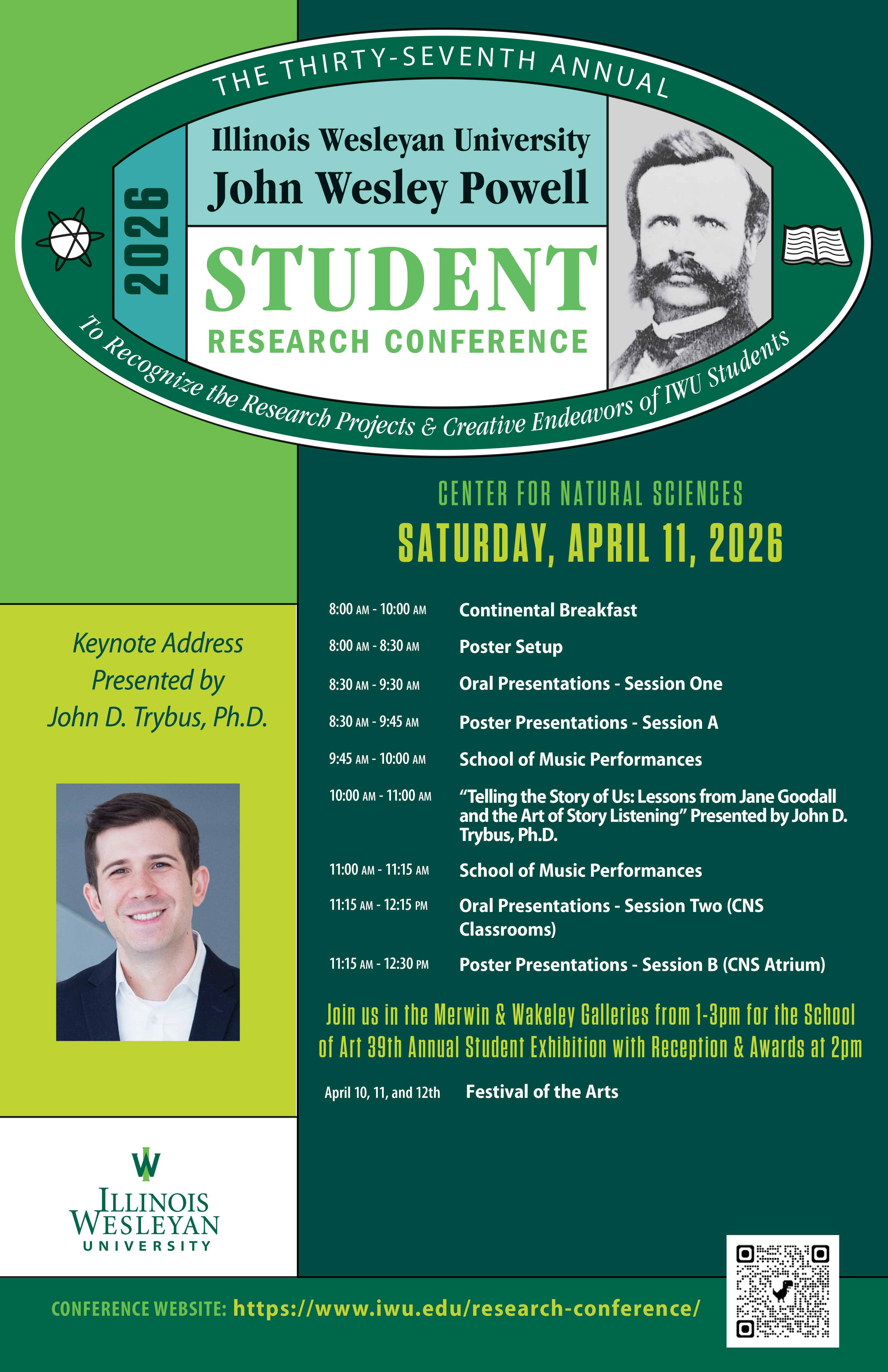
CNS Atrium
Start Date
4-11-2026 8:30 AM
End Date
4-11-2026 9:45 AM
Abstract
The purpose of this research synthesis is to investigate current research on problem-based learning (PBL) and real-world application use in mathematics education. PBL is a learner-centered instructional practice in which educators serve as guides, providing materials and problems for students to then grapple with and develop solutions in response (Savery, 2006). PBL is directly tied to the use of real-world application problems and projects, as PBL relies heavily on the use of real-world issues to motivate students. Increasingly, more emphasis is being placed on real-world application problems in mathematics education, and many advocate for the effectiveness and expansion of PBL (Aba-Oli et al., 2025). Thus, it is important to consider how these practices are being implemented and interrogate their effect on students. Toward that end, research articles were collected by searching journals of STEM education for references to problem-based learning or real-world applications. Articles were then selected on the basis of being peer reviewed, published within the past ten years, and discussing at least one of several relevant topics (i.e., theory of PBL, application and implementation of PBL in mathematics education, or use of real-world problems in mathematics education). This synthesis also seeks to provide recommendations to educators considering implementation of PBL.
Teaching Without a Safety Net: Problem-Based Learning and Real-World Applications in Mathematics Education
CNS Atrium
The purpose of this research synthesis is to investigate current research on problem-based learning (PBL) and real-world application use in mathematics education. PBL is a learner-centered instructional practice in which educators serve as guides, providing materials and problems for students to then grapple with and develop solutions in response (Savery, 2006). PBL is directly tied to the use of real-world application problems and projects, as PBL relies heavily on the use of real-world issues to motivate students. Increasingly, more emphasis is being placed on real-world application problems in mathematics education, and many advocate for the effectiveness and expansion of PBL (Aba-Oli et al., 2025). Thus, it is important to consider how these practices are being implemented and interrogate their effect on students. Toward that end, research articles were collected by searching journals of STEM education for references to problem-based learning or real-world applications. Articles were then selected on the basis of being peer reviewed, published within the past ten years, and discussing at least one of several relevant topics (i.e., theory of PBL, application and implementation of PBL in mathematics education, or use of real-world problems in mathematics education). This synthesis also seeks to provide recommendations to educators considering implementation of PBL.