

The Impact of Systematic Phonics Instruction on Student Spelling and Writing Abilities
Major
Educational Studies
Submission Type
Poster
Area of Study or Work
Educational Studies
Faculty Advisor
Leah Nillas
Faculty Advisor
David Platt
Location
CNS Atrium
Start Date
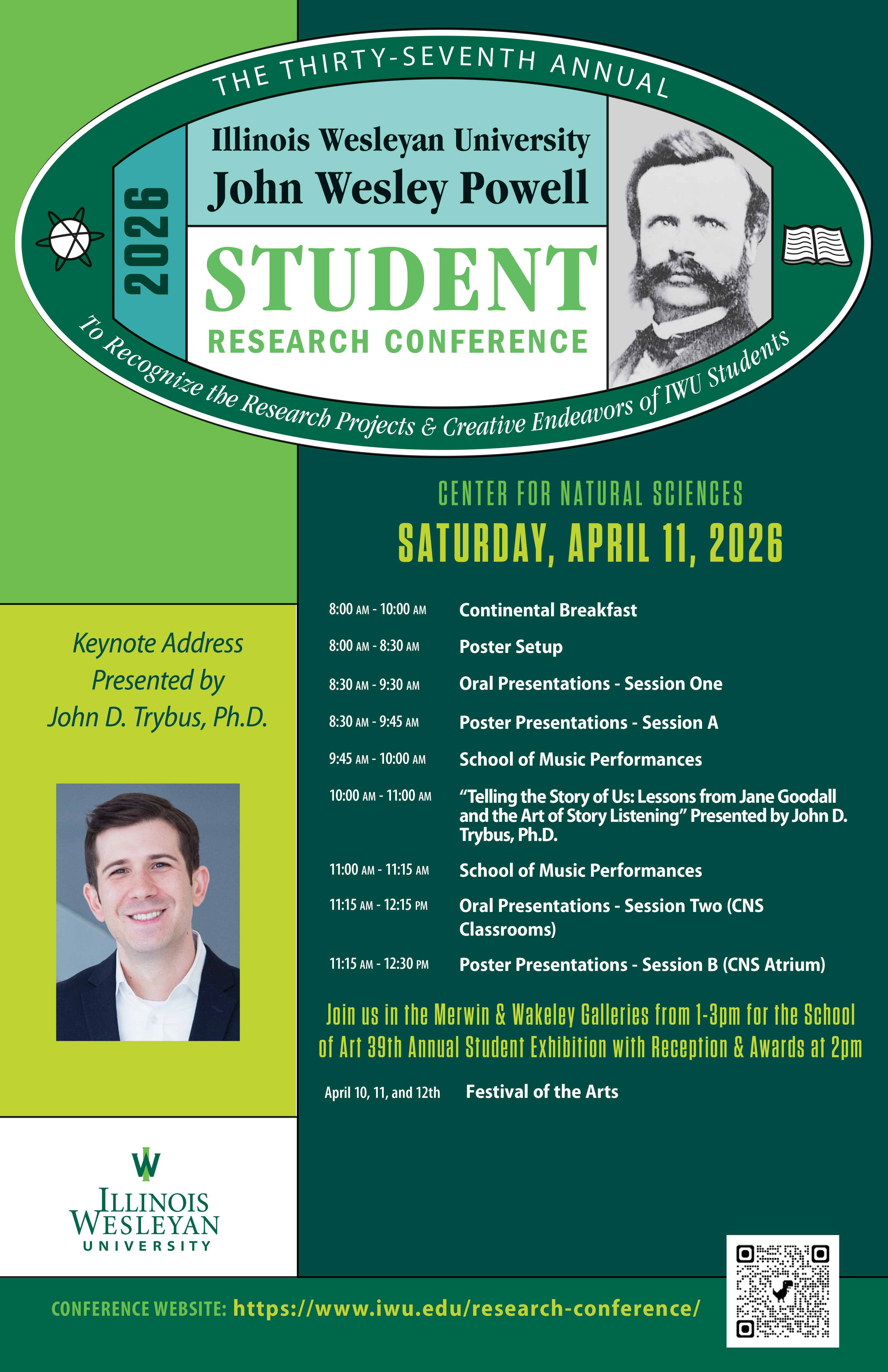
4-11-2026 11:15 AM
End Date
4-11-2026 12:30 PM
Abstract
Increasingly, early elementary schools in the United States are implementing routine systematic phonics instruction in the classroom to align with reading science. While there is a wide range of research to suggest that phonics as a whole, and more specifically, systematic phonics, has a positive impact on reading ability, there is little research that explores whether these programs have an impact on student spelling and broader writing abilities. Because spelling and writing fall under the umbrella of literacy, research not just analyzing impact on reading but also on these additional, important skills, is critical. In this self-study, twenty first grade students engaged in a routine including a systematic phonics program. Specifically, they were given whole-group instruction using the systematic phonics program called the University of Florida Literacy Institute (UFLI) Foundations early literacy program. Data was collected to analyze the impact of this phonics program on student spelling and writing. The data collected included the following: weekly dictation tests, writing samples, pre and post semester dictation tests, and lesson plan scope and sequence. Lesson plan scope and sequence was noted to give context to student work samples collected. Using this student data, the potential impact of systematic phonics instruction on spelling and writing abilities was analyzed.
The Impact of Systematic Phonics Instruction on Student Spelling and Writing Abilities
CNS Atrium
Increasingly, early elementary schools in the United States are implementing routine systematic phonics instruction in the classroom to align with reading science. While there is a wide range of research to suggest that phonics as a whole, and more specifically, systematic phonics, has a positive impact on reading ability, there is little research that explores whether these programs have an impact on student spelling and broader writing abilities. Because spelling and writing fall under the umbrella of literacy, research not just analyzing impact on reading but also on these additional, important skills, is critical. In this self-study, twenty first grade students engaged in a routine including a systematic phonics program. Specifically, they were given whole-group instruction using the systematic phonics program called the University of Florida Literacy Institute (UFLI) Foundations early literacy program. Data was collected to analyze the impact of this phonics program on student spelling and writing. The data collected included the following: weekly dictation tests, writing samples, pre and post semester dictation tests, and lesson plan scope and sequence. Lesson plan scope and sequence was noted to give context to student work samples collected. Using this student data, the potential impact of systematic phonics instruction on spelling and writing abilities was analyzed.