

What Lies Behind Closed Doors: Feared Domestic Space in Gothic Literature
Major
English – Literature
Second Major
Educational Studies
Submission Type
Oral Presentation
Area of Study or Work
English-Literature
Faculty Advisor
Joanne Diaz
Faculty Advisor
Wendy Kooken
Location
CNS E101
Start Date
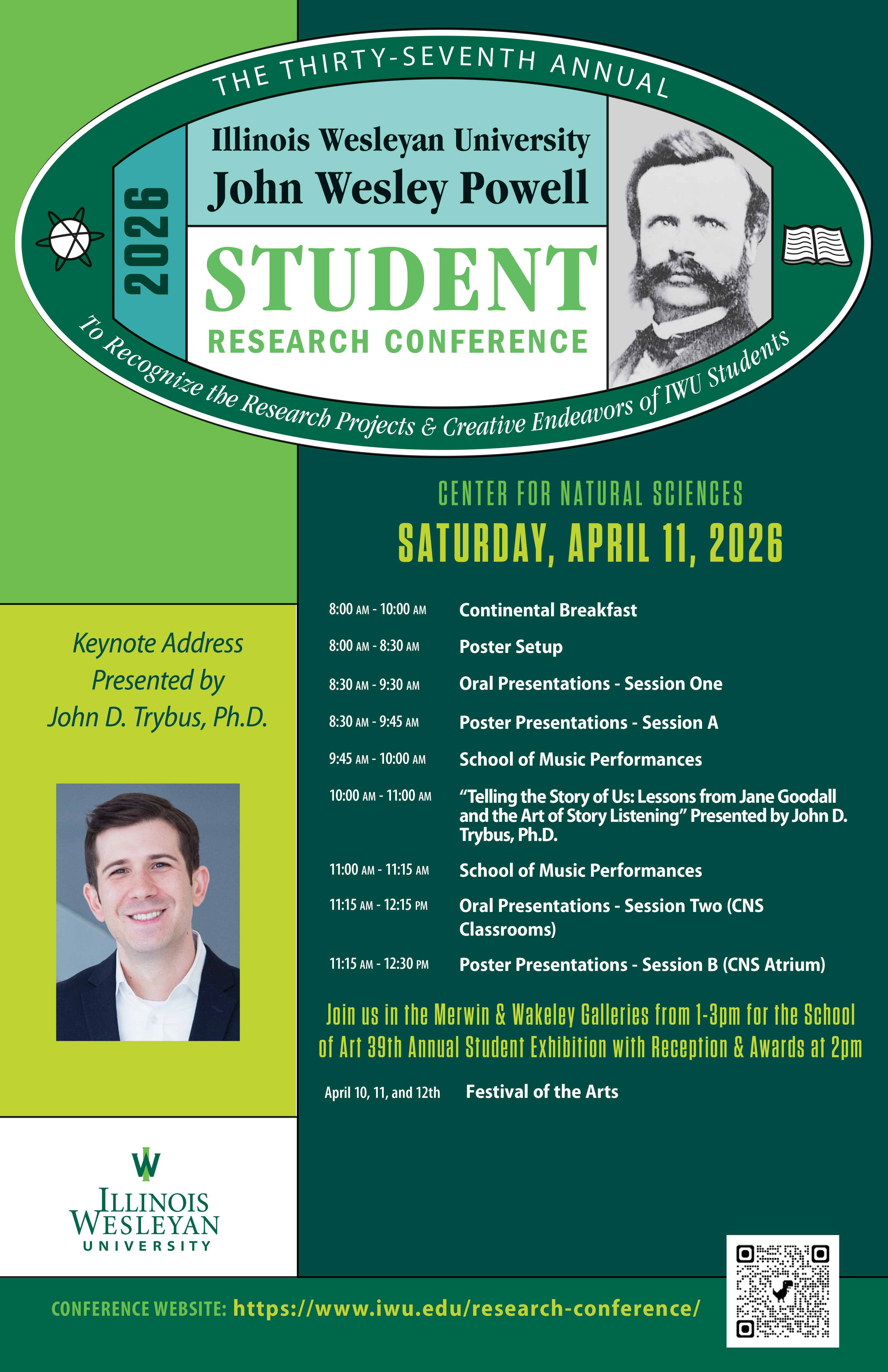
4-11-2026 11:15 AM
End Date
4-11-2026 12:15 PM
Abstract
In the current discussion of Gothic Literature’s use of domestic space, scholars have situated most of their focus on the “Female Gothic” and the isolation, entrapment, and abuse present within female-authored works. However, the societal shift of the home during the eighteenth and nineteenth centuries from a public to a private space redefined communal living in middle and upper classes into specialized rooms of privacy. This privacy, and the isolating experience of loneliness in once lively homes was a source of uncertainty and creative imagination in Gothic writers. Thus, looking at the domestic space as just a Female Gothic tool of expression limits its full thematic potential that, when observed through other lenses such as “Anti-Enlightenment”, Freud’s “Unheimliche”, and “the Sublime”, offers crucial insights on the anxieties and trepidation that Gothic writers were experiencing when wondering what happens when doors to the home begin to close. By looking across a wide array of influential Gothic literature, common themes of instability and the control of who gets to be in the private space begin to shine through. With this exploration, the domestic space transforms beyond a Female Gothic motif into wider themes of dominance over the home, the secrets that closed doors create, and the terror of solitude.
What Lies Behind Closed Doors: Feared Domestic Space in Gothic Literature
CNS E101
In the current discussion of Gothic Literature’s use of domestic space, scholars have situated most of their focus on the “Female Gothic” and the isolation, entrapment, and abuse present within female-authored works. However, the societal shift of the home during the eighteenth and nineteenth centuries from a public to a private space redefined communal living in middle and upper classes into specialized rooms of privacy. This privacy, and the isolating experience of loneliness in once lively homes was a source of uncertainty and creative imagination in Gothic writers. Thus, looking at the domestic space as just a Female Gothic tool of expression limits its full thematic potential that, when observed through other lenses such as “Anti-Enlightenment”, Freud’s “Unheimliche”, and “the Sublime”, offers crucial insights on the anxieties and trepidation that Gothic writers were experiencing when wondering what happens when doors to the home begin to close. By looking across a wide array of influential Gothic literature, common themes of instability and the control of who gets to be in the private space begin to shine through. With this exploration, the domestic space transforms beyond a Female Gothic motif into wider themes of dominance over the home, the secrets that closed doors create, and the terror of solitude.