

Legitimate Violence in a Trench Coat: The Complexity of Civil Disobedience and the Misremembering of Ideological Legacy
Major
History
Second Major
International and Global Studies
Submission Type
Poster
Area of Study or Work
History, Humanities, International Studies, Philosophy, Political Science
Faculty Advisor
William Munro
Location
CNS Atrium
Start Date
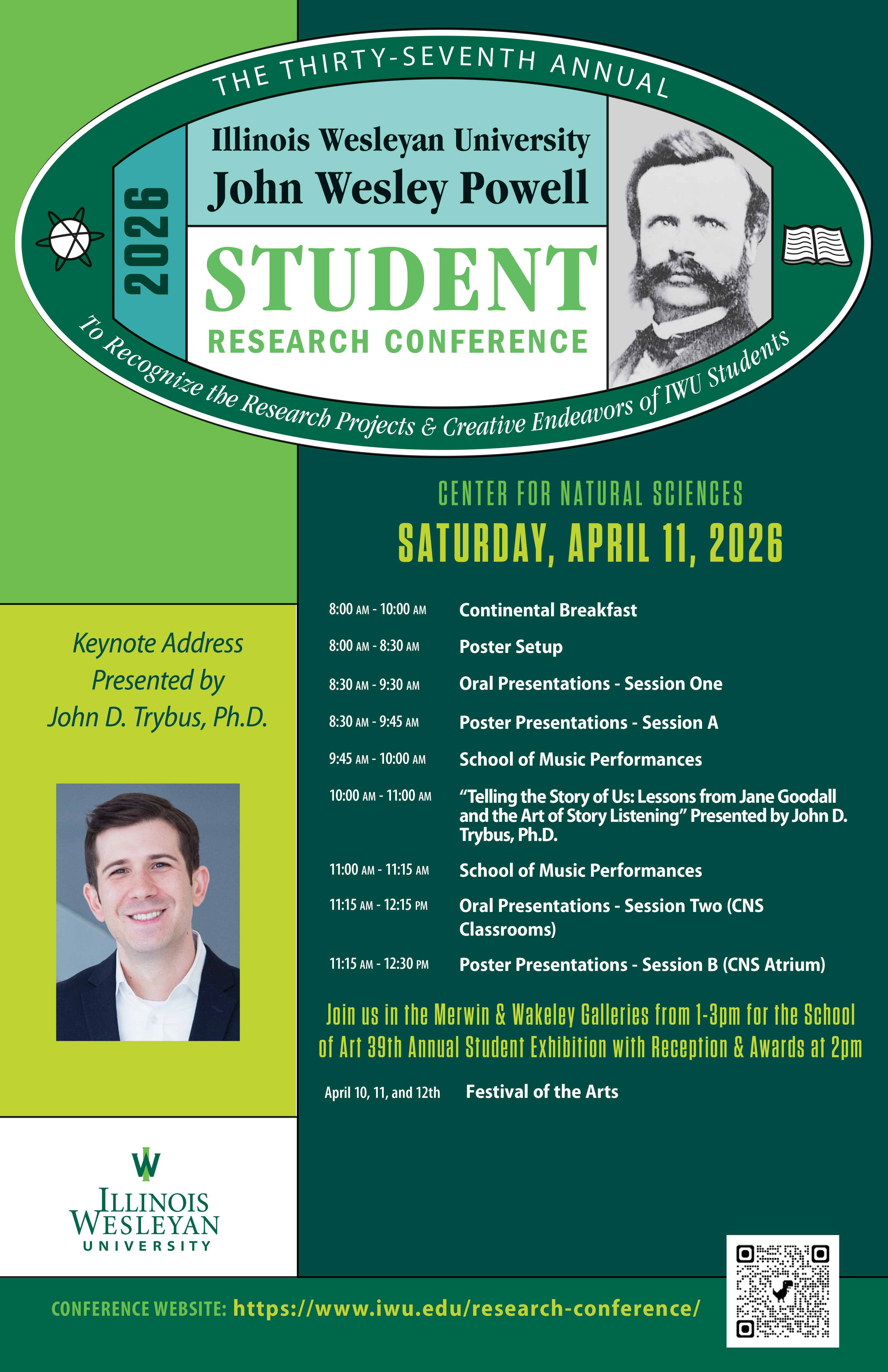
4-11-2026 8:30 AM
End Date
4-11-2026 9:45 AM
Abstract
For most modern academics, Civil Disobedience is a way to merge peaceful resistance to the state with an effective force able to change governments. However, a historical examination into Civil Disobedience, one guided by the philosophy of Frantz Fanon and Pierre Nora, reveals that the situation is more complex than these academics believe. By examining primary source documents, such as newspapers, essays from thought leaders, and academic journals, I will construct an understanding of Civil Disobedience that sees it as resistance to the state, but not one that is necessarily peaceful. In fact, I will show that many supposedly nonviolent leaders (Thoreau, Gandhi, Dr. King, etc.) embraced violence and/or provoked violence, but did so while attempting to provide a moral justification for it. They adopted a language of peace or legitimacy to try to present their struggle as different from violence of other struggles. This distinction is significant, as it provides evidence that society is uncomfortable with outrightly embracing violence, and that it is easier to do so by separating actions into their own classifications. However, it is this very separation of Civil Disobedience from the term “violence” that has provided the ground for the disconnect between reality and the memory that so many modern academics write about, while also allowing their legacies to be appropriated by state oppressors. Ultimately, my hope is to argue that if social change is to be successful, that activists must face the fact that violence has always been involved. It is how that violence is enacted and understood that creates the conditioning for whether said violence is "legitimate" or not.
Legitimate Violence in a Trench Coat: The Complexity of Civil Disobedience and the Misremembering of Ideological Legacy
CNS Atrium
For most modern academics, Civil Disobedience is a way to merge peaceful resistance to the state with an effective force able to change governments. However, a historical examination into Civil Disobedience, one guided by the philosophy of Frantz Fanon and Pierre Nora, reveals that the situation is more complex than these academics believe. By examining primary source documents, such as newspapers, essays from thought leaders, and academic journals, I will construct an understanding of Civil Disobedience that sees it as resistance to the state, but not one that is necessarily peaceful. In fact, I will show that many supposedly nonviolent leaders (Thoreau, Gandhi, Dr. King, etc.) embraced violence and/or provoked violence, but did so while attempting to provide a moral justification for it. They adopted a language of peace or legitimacy to try to present their struggle as different from violence of other struggles. This distinction is significant, as it provides evidence that society is uncomfortable with outrightly embracing violence, and that it is easier to do so by separating actions into their own classifications. However, it is this very separation of Civil Disobedience from the term “violence” that has provided the ground for the disconnect between reality and the memory that so many modern academics write about, while also allowing their legacies to be appropriated by state oppressors. Ultimately, my hope is to argue that if social change is to be successful, that activists must face the fact that violence has always been involved. It is how that violence is enacted and understood that creates the conditioning for whether said violence is "legitimate" or not.